Troy Aikman Lawrence McCutcheon Tribute: NFL Legend Death at 76
Introduction: Troy Aikman Remembers Lawrence McCutcheon
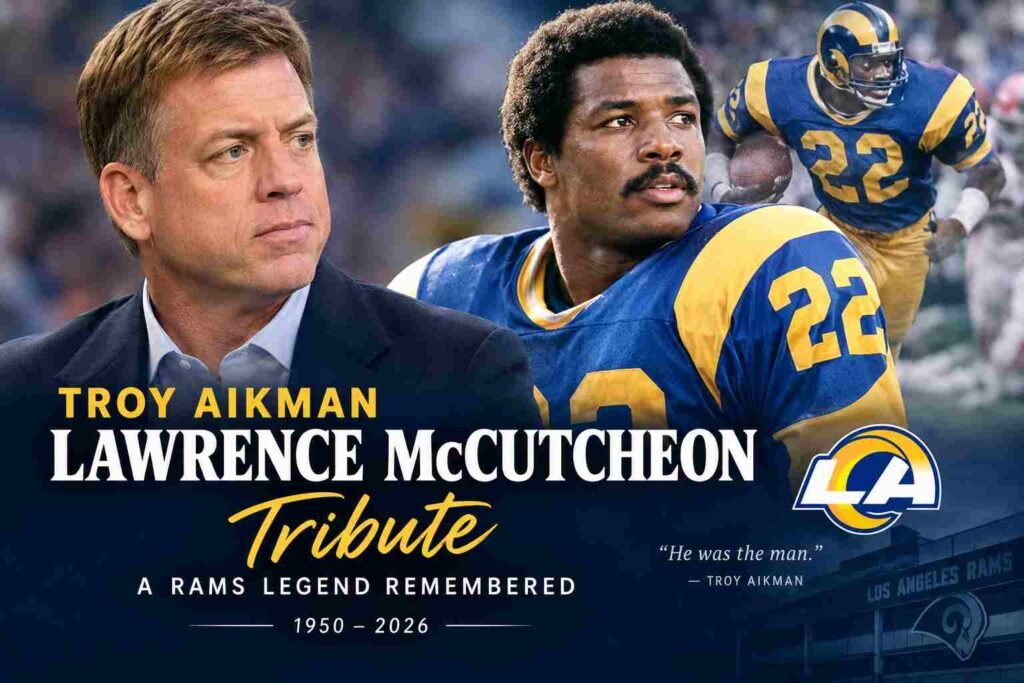
The Troy Aikman Lawrence McCutcheon tribute has caught the attention of the American football community after the death of former Los Angeles Rams running back Lawrence McCutcheon at age 76. McCutcheon, fondly known as “Clutch,” was one of the standout running backs of the 1970s and a respected member of the Rams organization for decades.
McCutcheon died on October 23, 2026, after a long battle with Parkinson’s disease, according to a statement his family released through the Los Angeles Rams. His death brought an outpouring of condolences from former players, football fans and people who remembered what he gave the sport.
Among those paying tribute was Troy Aikman, the former Dallas Cowboys quarterback and three-time Super Bowl champion. Aikman became famous for his work in Dallas, but he grew up in Southern California as a Rams fan, and McCutcheon was one of the players who inspired him as a boy.
Aikman’s message carried extra weight because it showed more than respect for a successful football career. It revealed a personal bond between a childhood admirer and the player he once watched from the stands or on television.
His tribute spotlighted two key parts of McCutcheon’s legacy: the impact he had on young football fans and the character he showed after his playing days ended.
McCutcheon leaves behind a remarkable football history that includes five straight Pro Bowl selections, significant rushing records, a memorable Super Bowl touchdown pass and more than three decades of work in the Rams’ front office.
His story is a reminder that a player’s influence can’t always be measured by championships or statistics. Sometimes the strongest legacy is the respect earned from teammates, colleagues and generations of fans.
What Did Troy Aikman Say About Lawrence McCutcheon?
Troy Aikman shared a heartfelt message after hearing about McCutcheon’s death. In a message reported by sports media, Aikman looked back on growing up as a Rams fan in Southern California and called McCutcheon a player he admired.
Aikman’s tribute read:
“Sad news. As a Rams Fan as a young boy growing up in SoCal, he was the man. I met him later in life and he was a true gentleman. RIP Lawrence.”
The message was shared on Aikman’s Instagram story after the Rams announced McCutcheon’s death.
Brief as it was, the statement captured the emotional weight of McCutcheon’s career. Aikman wasn’t just acknowledging another former NFL player. He was remembering someone who had shaped his childhood view of professional football.
For fans, childhood sports heroes often become tied to family memories, favorite teams and formative experiences. Players who inspire admiration early can stay important long after their careers end.
That link helps explain why Aikman’s words struck a chord with football supporters.
Why Aikman’s Tribute Matters
Aikman is widely known for what he achieved with the Dallas Cowboys, where he made his name as one of the top quarterbacks of his generation. His view of McCutcheon also offers a glimpse into the football culture of Southern California in the 1970s.
McCutcheon was a prominent Rams running back in that period. His performances made him a recognizable figure for supporters who followed the franchise before its later moves and eventual return to Los Angeles.
Aikman’s tribute links those two generations of football history. McCutcheon belonged to the era when Aikman was a young fan, while Aikman later became an NFL star himself.
That Aikman remembered McCutcheon as a gentleman after meeting him in person adds another layer. It suggests the admiration formed in childhood was strengthened by their later encounter.
In pro sports, the public often sees athletes through statistics, highlights, rivalries and championship results. Personal meetings can reveal qualities those numbers can’t capture.
Aikman’s message therefore worked as both a farewell to a childhood hero and an acknowledgment of McCutcheon’s character.
Who Was Lawrence McCutcheon? A Look at the Rams Legend
Lawrence McCutcheon was a professional American football running back who spent much of his NFL career with the Los Angeles Rams. He became one of the franchise’s leading offensive players in the 1970s and later built a second career in football management.
Born in Plainview, Texas, McCutcheon played college football at Colorado State University before entering the NFL. The Rams picked him in the third round of the 1972 NFL Draft, with the 70th overall selection.
His pro career took shape during an important stretch for the Rams. The team was a regular contender in the NFC, and its running game was central to its offensive identity.
McCutcheon quickly became a key piece of that offense. His ability to gain yards on the ground, contribute steadily and deliver in high-pressure situations earned him recognition around the league.
He played eight seasons with the Rams, from 1972 through 1979, before finishing his NFL career with other teams.
His tie to the franchise didn’t end when he stopped playing, though. McCutcheon came back to the organization in 1982 and eventually became an influential member of its personnel department.
That long association made him more than a former player. He became part of the institution’s history, contributing to the team across different eras.
Why Was Lawrence McCutcheon Called “Clutch”?
McCutcheon was widely known by the nickname “Clutch.” The nickname became part of his identity among Rams supporters and football followers. It fit the image of a dependable player who could make meaningful contributions when his team needed them.
Nicknames can sometimes overstate an athlete’s reputation, but McCutcheon’s achievements give a strong explanation for why he became such a memorable figure. nHe earned five consecutive Pro Bowl selections, led the Rams in rushing for five straight seasons and played an important part in the team’s postseason runs.
His versatility also made him valuable. Beyond his rushing ability, he showed he could contribute in unexpected ways, including a memorable passing touchdown in the Super Bowl. For supporters who watched the Rams in the 1970s, McCutcheon stood for consistency, competitiveness and a recognizable part of the team’s identity. His nickname remains an important part of how fans remember him after his death.
Lawrence McCutcheon’s NFL Career and Major Achievements
The story behind the Troy Aikman Lawrence McCutcheon tribute becomes clearer when you look at the former running back’s career.
McCutcheon played in an era when running backs were central to many NFL offenses. Teams counted on them to control possession, set up play-action passing and help manage the pace of games.
He proved especially effective in the Rams’ offensive system.
According to the Rams and Associated Press reporting, his professional achievements included five straight Pro Bowl selections from 1973 through 1977 and 6,186 rushing yards over his Rams playing career.
The table below sums up the key milestones of his football career.
| Career milestone | Details |
|---|---|
| College | Colorado State University |
| NFL Draft | 1972, third round |
| Draft position | 70th overall |
| Main NFL team | Los Angeles Rams |
| Rams playing years | 1972–1979 |
| Pro Bowl selections | Five consecutive, 1973–1977 |
| Rams rushing yards | 6,186 |
| Super Bowl appearance | Super Bowl XIV |
| Rams front-office return | 1982 |
| Retirement from Rams organization | 2016 |
These achievements help explain why McCutcheon stayed an important figure in franchise history long after his playing career ended.
Five Consecutive Pro Bowl Selections
One of the most significant accomplishments of McCutcheon’s career was his run of five straight Pro Bowl selections. The Pro Bowl honors players who stand out at their positions during the NFL season. One selection is a major achievement, but keeping up that level across several seasons is especially hard.
McCutcheon’s selections from 1973 to 1977 made him one of the notable running backs of his era. He also rushed for more than 1,000 yards in four of those five seasons, showing he could produce steadily and not just in one big year.
Those numbers built his reputation as a leading offensive player for the Rams. His performances also gave young fans a reason to follow his career closely. For someone like Aikman, who grew up watching the Rams, McCutcheon was part of the football landscape that shaped his earliest sports memories.
Lawrence McCutcheon’s Rushing Records
McCutcheon piled up 6,186 rushing yards with the Rams before leaving the team. At the time, that total made him the franchise’s all-time leading rusher. Other great Rams running backs have since passed the mark, but McCutcheon remains fourth on the franchise’s career rushing list.
He now sits behind Steven Jackson, Eric Dickerson and Marshall Faulk in the team’s historical rankings. His spot on that list shows the lasting significance of his contributions. Football records inevitably change as new generations enter the league. A player who once held a franchise record may eventually slide down the rankings.
That doesn’t lessen the achievement. McCutcheon helped set the standard against which later Rams running backs would be measured. His rushing total also reflects his consistency across many seasons. Reaching that level takes more than speed or strength; it takes durability, preparation, smart decision-making and the ability to work within a team’s offensive system. For Rams fans, those accomplishments remain an important part of his legacy.
Lawrence McCutcheon’s Memorable Moment in Super Bowl XIV
One of the defining moments of McCutcheon’s career came in Super Bowl XIV, when the Los Angeles Rams faced the Pittsburgh Steelers in January 1980.
The game paired two teams with different histories and expectations. Pittsburgh was chasing another championship under head coach Chuck Noll, while the Rams were trying to win the first Super Bowl title in franchise history.
McCutcheon helped produce one of the game’s memorable moments by throwing a 24-yard touchdown pass to wide receiver Ron Smith.
The play briefly put the Rams ahead and sparked excitement for a team trying to topple the defending champions. The Steelers, though, ended up winning 31–19. The Rams didn’t take the title, but McCutcheon’s touchdown pass became part of Super Bowl history.
Why the Super Bowl Touchdown Pass Was Significant
Running backs are mainly known for carrying the football, blocking and occasionally catching passes. Throwing a touchdown in the Super Bowl is an unusual feat for a player at that position. McCutcheon’s pass showed his versatility and created a memorable moment on the sport’s biggest stage.
The play also showed why his contribution to the Rams went beyond rushing statistics. He could affect a game in different ways, giving the offense another option when the situation called for something unexpected. For fans revisiting his career after his death, the Super Bowl play is a reminder of his ability to come through in high-pressure situations.
Even though the Rams lost, McCutcheon had a moment that became part of the franchise’s enduring football story. His career was defined not only by that play but also by years of steady production, leadership and dedication to the organization.
Lawrence McCutcheon’s Life After Playing Football
Many pro athletes face a hard transition when their playing careers end. Stepping away from the routine of training, competition and game-day preparation can be tough. McCutcheon found a way to stay connected to the sport he loved.
After leaving the Rams following the 1979 season, he kept playing in the NFL with the Denver Broncos and Seattle Seahawks in 1980 and the Buffalo Bills in 1981. He then returned to the Rams organization in 1982 as a scout. That choice began another long chapter in his football career.
His experience as a former pro running back gave him a valuable perspective when evaluating players.
Scouting takes more than spotting physical talent. Personnel professionals have to weigh technique, decision-making, consistency, potential development and how a player might fit into a team’s overall strategy. McCutcheon spent decades in this world and eventually held several important positions.
His Work in the Rams Front Office
McCutcheon held multiple positions in the Rams’ personnel department, including director of scouting and director of player personnel. He served as director of player personnel from 2003 until his retirement in 2016, and he also worked as a national scout during his broader career with the organization.
His responsibilities put him in a different part of the game from the one he had occupied as a player. Instead of trying to gain yards on the field, he helped evaluate the talent organizations need to build competitive rosters.
This shift is an important part of his story because it shows how his football knowledge kept benefiting the Rams. McCutcheon spent about 42 years with the organization across his playing and front-office career. His total involvement with the NFL stretched to 44 years.
That level of service is notable in a league where coaching staffs, front-office personnel, players and even franchises can change a great deal over time. His experience gave him a perspective few could match: he understood the demands of professional football as a player and the long-term planning required to build a team.
For the Rams, his contribution wasn’t limited to the years when fans watched him carry the ball. His work behind the scenes also became part of the franchise’s history.
Lawrence McCutcheon Cause of Death: What We Know
One of the most searched questions after the news is: What was Lawrence McCutcheon’s cause of death? McCutcheon died on October 23, 2026, at age 76, after a long battle with Parkinson’s disease, according to his family’s statement released through the Rams. His family said relatives were with him at his bedside.
Parkinson’s disease is a progressive neurological condition that affects movement. Symptoms can include tremors, stiffness, slowed movement and trouble with balance and coordination, though the condition varies a great deal between individuals. The family called McCutcheon’s fight with the disease courageous. They didn’t say publicly when he was diagnosed.
It’s important to separate the information the family confirmed from details that haven’t been made public. There’s no need to speculate about the exact circumstances of his final days. His passing has renewed attention on Parkinson’s disease and the challenges faced by people living with progressive neurological conditions.
For former teammates, fans and colleagues, however, the immediate focus has been remembering the person McCutcheon was throughout his life. His football achievements remain significant, but the tributes also stress his relationships, professional reputation and decades of service.
Family’s Request to Honor His Memory
McCutcheon’s family asked people who want to honor him to consider donating to the Michael J. Fox Foundation for Parkinson’s Research instead of sending flowers.
The foundation backs research aimed at improving understanding of Parkinson’s disease and advancing better treatments. The request gives supporters a practical way to remember McCutcheon while contributing to research on the illness he faced.
The family’s message also shows how a public figure’s legacy can reach beyond sport. His memory can encourage awareness, support research and draw attention to the experiences of people affected by Parkinson’s disease.
Los Angeles Rams Pay Tribute to Lawrence McCutcheon
Troy Aikman wasn’t the only prominent figure to remember McCutcheon. The Los Angeles Rams also issued a statement expressing sadness at his passing and recognizing the importance of his contributions to the franchise. The team highlighted his achievements as a five-time Pro Bowl running back and his later service as a scout and director of player personnel.
Its statement stressed that McCutcheon’s impact reached across generations of the organization. That recognition is especially meaningful because McCutcheon served the Rams in two very different roles.
As a player, he helped the team compete on the field and earned a place in its record books. As an executive and scout, he helped evaluate talent and support the organization’s long-term football operations. His connection to the franchise outlasted changes in personnel, team leadership and location.
The Rams were based in Los Angeles during McCutcheon’s playing career, later moved to St. Louis and eventually returned to Los Angeles. Through all of those periods, his professional history stayed closely linked to the organization. That continuity helps explain why his death has been described as the loss of a franchise legend and not simply the passing of a former player.
Other Tributes and Reactions From the Football Community
The response to McCutcheon’s death reached beyond the Rams organization and former NFL teammates. Messages from football supporters and other public figures reflected the personal bond many people felt with him.
American musician Tom Morello also remembered McCutcheon, calling him his favorite player when he was a child. Rams linebacker Byron Young answered the news with a prayer emoji, while football writer Howard Balzer praised McCutcheon as both an accomplished professional and a down-to-earth person.
These reactions show how McCutcheon’s reputation stretched beyond the football field.
Why Fans Continue to Remember McCutcheon
For longtime Rams supporters, McCutcheon stands for an important period in franchise history. His playing career unfolded in the 1970s, when the team’s performances drew devoted followers and created memories that lasted for decades.
Some fans remember his rushing ability and Pro Bowl appearances. Others recall the excitement around his performances in big games. Still others remember him as a familiar name tied to their childhoods, family traditions and favorite team.
Aikman’s tribute fits into that wider picture. His words reflect the experience of a young supporter who admired a player before eventually becoming a football star himself.
The tributes also point to something statistics can’t fully measure: the lasting influence athletes can have on people who watch them play. McCutcheon’s career ended decades ago, but the memories tied to it remain part of the Rams’ identity.
Lawrence McCutcheon’s Legacy With the Los Angeles Rams
Lawrence McCutcheon’s legacy rests on more than one achievement. His five straight Pro Bowl selections made him a leading running back of the 1970s. His 6,186 rushing yards with the Rams placed him among the most productive players in franchise history. His touchdown pass in Super Bowl XIV gave him a memorable place in one of football’s biggest events.
Yet his career after retirement may be just as important in weighing the full reach of his influence. By returning to the Rams as a scout and eventually becoming director of player personnel, McCutcheon showed a commitment to football that went beyond his time as an athlete. He spent decades helping the organization evaluate players and build its roster, applying the knowledge he had gained through his own professional experience.
His story also offers a lesson for younger athletes. A successful career doesn’t necessarily end when a player leaves the field. Experience, discipline and an understanding of the game can open doors to contribute in new ways.
For the Rams, McCutcheon was a player, a colleague and a long-serving member of the organization. For Aikman, he was a childhood hero who later proved to be a gentleman. For fans, he was a familiar figure whose performances helped shape memories of an earlier era of professional football. Taken together, those perspectives explain why his passing has drawn such heartfelt reactions.
What the Troy Aikman Lawrence McCutcheon Tribute Means for NFL Fans
The Troy Aikman Lawrence McCutcheon tribute is significant because it brings together two generations of professional football.
Aikman became a championship-winning quarterback with the Dallas Cowboys, while McCutcheon built his reputation as a running back with the Rams. Their careers followed different paths, but Aikman’s childhood admiration linked them in a personal way.
His message was short, but it underscored the respect that can last between athletes and the people who inspired them.
The tribute also encourages fans to revisit McCutcheon’s career and recognize his accomplishments. His statistics, postseason performances and decades of work in the Rams’ front office show how much he contributed to the sport.
As tributes continue, McCutcheon will be remembered not only for his accomplishments but also for the relationships he built and the example he set throughout his professional life.
His death marks the end of a remarkable life, but his influence remains visible in Rams history and in the memories of the people who watched, worked with and admired him.
Frequently Asked Questions (FAQs)
1. Why did Troy Aikman pay tribute to Lawrence McCutcheon?
Troy Aikman paid tribute to Lawrence McCutcheon after the former Rams running back’s death at 76. Aikman recalled growing up as a Rams fan in Southern California and called McCutcheon a childhood hero who was also a gentleman when they met later in life. Yahoo Sports
2. What did Troy Aikman say about Lawrence McCutcheon?
Aikman expressed sadness over McCutcheon’s passing, recalled how much he admired him as a young Rams fan and called him a true gentleman. He closed his message with a wish that McCutcheon rest in peace.
3. How did Lawrence McCutcheon die?
Lawrence McCutcheon died on October 23, 2026, at age 76, after a long battle with Parkinson’s disease. His family announced his death through the Los Angeles Rams and said relatives were at his bedside.
4. How many Pro Bowls did Lawrence McCutcheon make?
McCutcheon was picked for five consecutive Pro Bowls from 1973 through 1977. He was also a second-team Associated Press All-Pro selection in 1974, recognizing his standing among the NFL’s leading players.
5. What was Lawrence McCutcheon’s role with the Rams after retirement?
After returning to the Rams in 1982, McCutcheon worked as a scout and held several personnel positions. He eventually served as director of player personnel from 2003 until retiring in 2016, extending his involvement with the franchise well beyond his playing career.
6. What was Lawrence McCutcheon’s biggest NFL achievement?
McCutcheon earned five consecutive Pro Bowl selections, piled up 6,186 rushing yards with the Rams and became the franchise’s leading career rusher at the time he left. He also threw a touchdown pass in Super Bowl XIV against the Pittsburgh Steelers.
7. How can fans honor Lawrence McCutcheon’s memory?
McCutcheon’s family asked for donations to the Michael J. Fox Foundation for Parkinson’s Research in place of flowers. Supporters can also honor his legacy by remembering his career and contributions to the Los Angeles Rams.
Final Thoughts
The Troy Aikman Lawrence McCutcheon tribute is a reminder that an athlete’s influence can last long after retirement. McCutcheon inspired fans during his playing career, earned respect across the NFL and kept serving the Rams organization for decades after leaving the field.
Aikman’s heartfelt message captured the personal side of that legacy. Behind the records and achievements was a player who left a lasting impression on a young football fan and later earned his admiration as a person.
As the NFL community remembers Lawrence McCutcheon, his story stands as a testament to talent, dedication and a lifelong commitment to the game.