Man City Media Rule Breach: What Happened After the Liverpool Win?
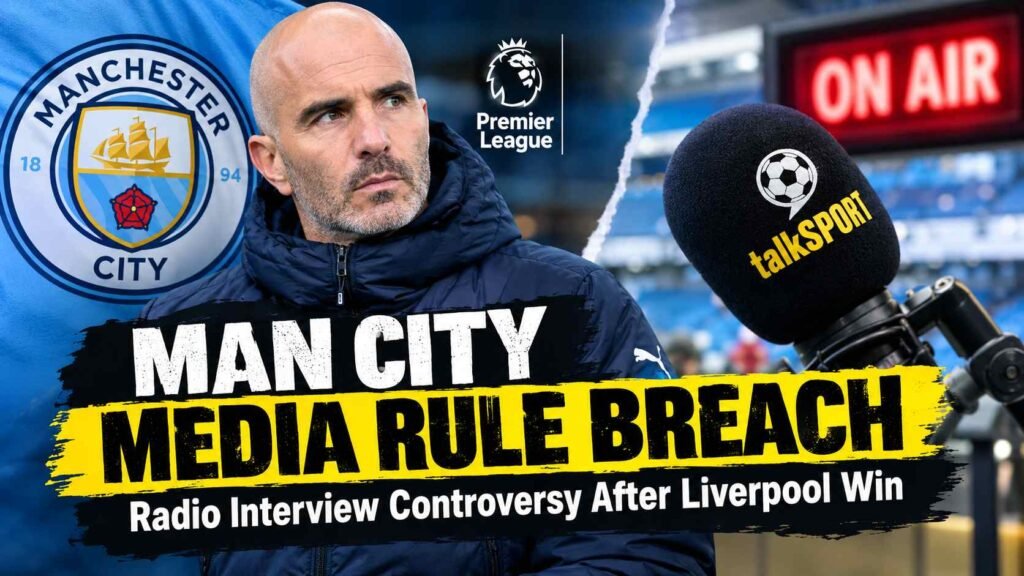
The Man City media rule breach story has become another talking point around Manchester City after the club reportedly refused to give radio broadcasters access to manager Enzo Maresca following a 3–0 win over Liverpool.
According to a report published by talkSPORT on October 12, 2026, Manchester City let Maresca speak to television broadcasters and attend his post-match press conference but did not offer the same access to radio rights holders, talkSPORT among them. The report names Premier League Rule K.207 as the regulation at the centre of the dispute.
The story raises real questions about what Premier League clubs owe their broadcasting partners. A big win usually makes the biggest headline, but media obligations are still part of the professional framework that governs English football. The reported incident also lands at a sensitive time for City, which is dealing with a separate, high-profile dispute over Premier League financial regulations.
It is important, though, to keep the reported media incident apart from the financial case. They involve different obligations and need separate assessments. This article looks at the reported Man City media rule breach, what Rule K.207 means, the possible consequences of a confirmed violation, and what supporters should watch for next.
What Is the Man City Media Rule Breach?
The latest report centres on Manchester City’s alleged failure to give radio broadcasters access to Enzo Maresca after the club’s reported 3–0 win over Liverpool.
The issue isn’t simply whether the manager attended a press conference. According to the report, he did attend the post-match press conference and spoke to television outlets. The controversy is about the reported lack of access for radio. That distinction matters, because different broadcasting arrangements can carry different obligations.
Premier League clubs take part in a competition backed by extensive broadcasting agreements. Media access helps rights holders deliver match reaction, interviews, analysis and other content to their audiences.If a club fails to meet a specific obligation, the key question is whether the applicable rule required it to provide that access in the circumstances.
The talkSPORT report names Rule K.207 as the provision involved. Even so, the precise circumstances and any formal disciplinary outcome should be confirmed through an official Premier League announcement or other reliable documentation before anyone reaches a final conclusion. At the time of the cited report, the key difference is between a reported rule breach and a formally established disciplinary finding.
What Happened After Man City’s 3–0 Win Over Liverpool?
Manchester City’s reported win over Liverpool is the immediate backdrop to the media row. A result like that normally brings heavy post-match coverage, including interviews with the manager, questions about tactics and reaction to the team’s performance.
The media-access dispute, however, pulled some attention away from the result and toward the club’s duties to broadcasters. According to talkSPORT, City made Maresca available to television outlets and for a post-match press conference but denied radio broadcasters access to him. The report specifically mentions talkSPORT among the affected broadcasters.
The reported difference matters because radio broadcasters serve Premier League audiences too. Their coverage can include immediate reaction from the manager, match analysis and discussion with presenters and commentators.
A club’s media responsibilities aren’t necessarily met just because one category of broadcaster got an interview. The relevant rule decides which appearances must be provided and to whom.
Still, the available report shouldn’t be stretched into unsupported claims about the club’s motives. Without a confirmed explanation from Manchester City or an official finding, it would be premature to say why radio access was reportedly withheld.
What Is Premier League Rule K.207?
Premier League Rule K.207 is the provision the talkSPORT report links to the alleged media-access issue.
The wider framework for broadcaster access sits in Section K of the Premier League handbook, which covers stadium criteria and broadcasters’ requirements. The handbook includes provisions on interviews, mixed-zone access, press conferences and other media activities.
These requirements help organise media access across the competition and set expectations for participating clubs.
For example, the handbook’s Rule K.166 says participating clubs must make players and/or their manager available for post-match interviews in line with the relevant provisions. The precise requirements are laid out in the rules that follow.
The difference between general media requirements and the specific provision alleged to have been breached is essential.
The fact that the handbook contains post-match interview obligations doesn’t, on its own, prove Manchester City broke a particular rule. Showing that would require the exact provision, the circumstances of the interview arrangements and any relevant explanation or exception.
For that reason, readers should consult the current Premier League handbook and any official notice about the reported incident before treating the allegation as a final disciplinary finding.
Why Are Radio Interviews Important in the Premier League?
Radio is still an important part of football coverage, even in an age of television, streaming, podcasts and social media.
Millions of supporters follow football through live radio commentary, post-match phone-ins, interviews and sports news shows. Radio can matter most to fans travelling home from games or listening while they work.
Immediate Post-Match Reaction
Managers can explain their tactical choices, assess their team’s performance and answer questions about key moments right after a match.
Radio interviews give supporters another way to hear those explanations.
Access for Different Audiences
Not every fan watches live television. Some rely on radio or audio coverage to follow their clubs.
Giving access to the relevant media helps broadcasters offer a fuller account of a match.
Fairness and Consistency
A consistent framework helps broadcasters know what access to expect and helps clubs coordinate their obligations.
If different broadcasters get different access without a basis in the applicable rules, questions can arise about whether the competition’s requirements have been met.
Commercial and Contractual Responsibilities
Broadcasting agreements help fund professional football. Access to club representatives can be part of the wider service offered to audiences.
A dispute over interview access can therefore raise questions about regulatory compliance and commercial arrangements, and not just a quarrel with one journalist.
Could Manchester City Face Punishment?
The possible consequences of the reported Man City media rule breach depend on whether the relevant authority finds a rule was violated and on what sanctions the applicable regulations allow.
It would be inaccurate to predict any particular punishment before the case’s formal status is confirmed.
Several outcomes may be relevant in football disciplinary systems, depending on the governing provisions.
A Financial Penalty
A fine may be available for certain regulatory violations. Whether it applies here, and how much it could be, would depend on the applicable rules and any formal decision.
No specific fine should be presented as confirmed unless an authoritative source announces it.
A Formal Warning or Reprimand
Some disciplinary frameworks allow warnings or reprimands in suitable circumstances. Whether that is possible depends on the rule involved and the authority’s powers.
A Formal Investigation
If the Premier League decides the reported circumstances warrant a closer look, it could review the facts under its disciplinary procedures.
Such a review would need to establish what happened and whether the club met its obligations.
Further Disciplinary Action
More serious consequences may be possible under some competition rules, but sanctions vary with the type of violation.
It would be misleading to suggest that a reported media-access dispute automatically carries a points deduction or another major sporting penalty.
Supporters should wait for a formal announcement before drawing conclusions about any punishment.
How Could a Media Rule Breach Affect Man City’s Reputation?
Even if a reported media dispute doesn’t lead to a major sporting sanction, it can draw attention and shape public perception.
Manchester City is a globally followed club. Its results, managerial decisions, commercial deals and regulatory matters regularly get heavy coverage.
A media-access controversy can give club representatives one more issue to address.
Relations With Broadcasters
Broadcasters need dependable arrangements for post-match interviews and other content. A dispute can raise questions about how future access will be handled.
The long-term significance would depend on whether the matter is settled quickly or becomes part of a wider disagreement.
Public Relations
A clear explanation from the club could help supporters and media organisations understand the circumstances.
If the facts stay murky, speculation may continue. That doesn’t make the speculation accurate, but it can keep the issue in the spotlight.
Pressure on Club Officials
Club officials may be asked to explain the incident, especially if the Premier League comments or a formal disciplinary process begins.
The club would need to separate the media-access issue from unrelated sporting and regulatory matters.
Is This Connected to Manchester City’s Financial Rule Case?
No direct link has been established between the reported media-access incident and Manchester City’s separate financial-rule proceedings.
The two issues involve different categories of Premier League obligations and should be treated independently.
On September 29, 2026, the Premier League announced that an independent commission had found Manchester City guilty of charges relating to financial rules over a nine-season period, as well as most of the charges about cooperation with the league’s investigation. The league also said the question of sanctions would be dealt with separately.
Manchester City then appealed the commission’s decision. The Premier League confirmed the appeal on October 2, 2026.
Those developments are separate from the radio-interview report.
The financial proceedings involve allegations and findings about commercial agreements, financial reporting, spending limits and cooperation with the investigation. The media story, by contrast, is about reported access for broadcasters after a match.
Readers shouldn’t assume one issue proves anything about the other.
That distinction matters even more when several Manchester City stories trend at once. Accurate reporting should name the specific rule involved in each case and describe its status separately.
What Has Enzo Maresca Said About the Controversy?
The talkSPORT report names Enzo Maresca as the manager involved in the reported post-match access dispute.
But the report alone doesn’t establish that Maresca personally decided to deny radio broadcasters access, and it doesn’t give his explanation for what happened.
Responsibility for arranging media appearances may involve different club staff and established procedures. The precise facts would need confirming before blame is placed on any individual.
Supporters should also separate comments about Manchester City’s wider financial case from any statement addressing the alleged media breach.
Maresca has discussed the separate financial proceedings publicly. ITV reported on October 9, 2026, that he expressed trust in the club while answering questions about the financial-rule decision.
That reporting shouldn’t be treated as a response to the radio-interview controversy unless a direct connection is established.
How the Premier League Could Respond
If the Premier League looks into the reported incident, the process would depend on the relevant regulations and the evidence available.
The league’s published explanation of its disciplinary framework says suspected rule violations can be investigated and, where appropriate, referred to an independent commission. It also explains that commissions have powers to impose sanctions under the applicable rules.
In a media-access dispute, the important questions would include:
- What access was required under the applicable rule?
- Which broadcaster or broadcasters were entitled to an interview?
- Was the required interview offered or provided?
- Did any relevant exception or alternative arrangement apply?
- What explanation, if any, did Manchester City give?
- Has the Premier League formally opened proceedings or announced a decision?
The answers would help show whether a breach occurred and what response, if any, is appropriate.
A report of an incident isn’t the same as a formal charge, and a charge isn’t the same as a final finding.
What Should Fans Watch for Next?
Supporters following the Man City media rule breach story should look for three main developments.
First, an official response. A statement from Manchester City or the Premier League could clarify the precise circumstances and whether the matter is being examined.
Second, confirmation of the applicable rule. The exact wording of the relevant provision would help explain the obligations involved and any possible exceptions.
Third, a formal outcome. If disciplinary proceedings begin, an official announcement would give the clearest information about the finding and any sanction.
Until those details arrive, it’s best to call the incident a reported or alleged media-rule breach and not a confirmed disciplinary offence.
Frequently Asked Questions
1. What is the Man City media rule breach?
The phrase refers to a reported incident in which Manchester City allegedly failed to give radio broadcasters access to manager Enzo Maresca after a reported 3–0 win over Liverpool. The talkSPORT report names Premier League Rule K.207 as the relevant provision.
2. Which Premier League rule is involved?
The report names Rule K.207. How that provision applies should be checked against the relevant Premier League handbook and any official statement on the incident.
3. Why did Manchester City reportedly deny radio access?
The cited report describes the difference in access but gives no definitive explanation for the club’s reported decision. An official response would be needed to clarify the circumstances.
4. Could Man City receive a fine?
A fine or other disciplinary measure would depend on the applicable regulations and any formal finding. No particular punishment should be treated as confirmed without an official announcement.
5. Is the media breach connected to the financial-rule case?
No direct connection has been established. The financial proceedings and the reported radio-interview issue involve different matters and should be judged separately.
6. Where can fans find the latest updates?
Fans should check Manchester City’s official communications, the Premier League’s official announcements and reputable football news organisations. Publication dates, and the difference between allegations and confirmed decisions, are especially important.
Final Thoughts
The Man City media rule breach story shows how much media access matters in modern Premier League football. According to the latest cited report, Manchester City allegedly failed to give radio broadcasters access to Enzo Maresca after a 3–0 win over Liverpool, even though it allowed television interviews and a post-match press conference. The report names Rule K.207 as the relevant provision.
The next key development will be confirmation of the circumstances and any response from the club or the Premier League. Until then, the reported incident shouldn’t be confused with a final disciplinary finding or with Manchester City’s separate financial-rule case. Following verified updates will give supporters a clearer picture of whether the controversy leads to any formal action.